

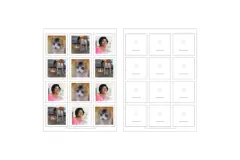
Page sizes and sheets
| Page | Picture | Pages on a Letter sheet | Pages on an A4 sheet |
|---|---|---|---|
| 48 × 32 mm, with a 14 mm tab | 21 | 24 | |
| Large | 72 × 48 mm, with an 18 mm tab | 10 | 10 |
A clip of two seconds at 10 frames per second fills one Letter sheet of pocket pages; the same clip at 12 frames per second needs two.
What moves well
- One thing that moves across a still background: a jump, a ball, a wave, a cat on a sofa.
- Hold the phone still, on a table or against a wall; a moving camera makes a wobbly book.
- Short and complete: a movement that ends where it started (a bounce, a spin) can be flipped again and again.
For a moving picture on the screen instead there is the video to GIF converter, and more for photos is on the Photos page.
Questions
How many pages does my flipbook get?
The length of the clip times the frames per second: two seconds at 10 frames per second are 20 pages, three seconds at 12 are 36. Between 20 and 60 pages flips best; the maker stops at 120. Fewer frames per second give a shorter, jerkier book, more give a smoother and thicker one.
How do I put it together?
Print at 100 percent, cut along the dashed lines, and stack the pages in number order with 1 on top, all tabs on the same side. Square the stack by tapping it on the table, then hold the tabs with a strong binder clip or two staples. Hold the clip in one hand and let the pages slip off the thumb of the other. If the movement runs backwards, flip from the other end of the stack.
What paper works best?
Cardstock of about 160 to 200 gsm (60 to 110 lb) flips best because each page springs back. Plain printer paper works for a first try; the pages are just softer.
My video is vertical. Does that work?
Yes. The pages are 3 by 2, so a tall phone video is cut to that shape; the crop slider moves the picture up or down until the part that moves is in the page.
Is my video uploaded?
No. The browser plays the file on your device, the maker copies the frames from it into the page, and the PDF is made there too.