How does the ticket maker work?
- Type the names, one per line. One ticket or sixty: each line becomes one finished ticket with that name printed on it.
- Pick the punch word, the date, the class and the paper. The date prints on every ticket (the default is Christmas Eve 2026), and the class reads FIRST CLASS, SECOND CLASS or SLEEPER CAR.
- Download the PDF, print at 100 per cent, cut on the dashed line. The scale bar on the sheet tells you the print came out at true size.
Every ticket carries its own serial number in the stub, the way a real rail ticket does, so a stack of class tickets reads like a proper print run.
Where the ticket goes on the day
The ticket is the prop for the door: the grown-up plays conductor at the living-room or classroom door, takes each ticket, reads the passenger’s name aloud, and punches it. Then the movie starts, or the story, or the hot chocolate. Teachers who run a train day punch the tickets as the children sit down, which is the part the children remember; the punch is printed, so the ritual survives a teacher who has no hole punch, and a pin pressed through the printed dots gives the raised, real-punch version.
The Christmas bench around it
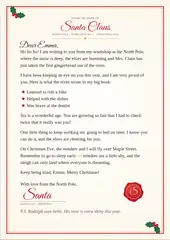
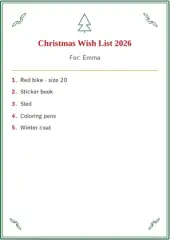
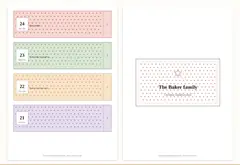
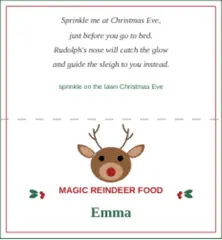
The ticket joins the other made-here Christmas things: the letter from Santa for the eve itself, the reindeer food toppers for the lawn, the caroling songbook for the singing, and the wish list for what goes under the tree. The Christmas page lays out what to start when.
What this tool does not do
It does not print the train: the ticket is paper, the journey is imagination. It does not need an account, an email address or a plug-in, and it does not watermark the tickets. And it keeps the story honest on the ticket itself: the words on it are NORTH POLE LIMITED, one way, first star of Christmas Eve.
Questions
What is a Christmas train ticket?
It is the golden admission ticket for a christmas-eve train story: the child hands it to the conductor (you, in a good mood) at the door, the conductor looks at the name, punches the ticket, and the ride to the north pole begins. Families use it for the movie night, classes use it for the last-week-of-term train day, and it fits both because the name, date and punch are typed, not drawn by hand.
How does the conductor punch work?
You type a punch word (BELIEVE is the default, a short name works too) and the tool lays the word's letters out as small punched holes through the ticket's stub, five dots wide and seven tall per letter. The fixed printables leave the punch to you with a hole punch and a steady hand; this one computes it. For a raised punch a real hand punch or a pin pressed through each printed dot works on cardstock.
What size do the tickets print?
Each ticket is a true 8 × 3 in (203 × 76 mm). Print at 100 per cent (actual size), never fit to page, and check the 50 mm bar on the sheet with a ruler. On A4 the ticket sits about 3 mm from the long paper edges, so if your printer clips the frame, use US Letter or trim the edge after printing.
Can I make tickets for a whole class?
Yes, that is what the names box is for. Type one name per line, up to 60, and every line becomes one finished ticket with that name, its own serial number and the same punch. A class set is one download; the cutting sheet carries two tickets per page.
Which paper should I print on?
White cardstock (about 200 to 250 gsm) looks and feels like a real ticket and survives the punch. Plain paper works for a first run. The ticket is line art and type, so a mono printer loses nothing.
Is anything uploaded from this page?
No. The names, the punch word and the PDF are built inside your browser, and no request carries anything you typed. Your choices stay saved in this browser for your next visit; clear this site's data in your browser settings to remove them.