Key takeaways
What lasts: Small things done on the same day every year, like a paper chain or reindeer food.
The 2026 dates: Advent starts 29 November, St Nicholas Day is Sunday 6 December, Christmas Day a Friday.
Start small: One or two traditions this year; keep the ones the children ask for again.
Paper chain: From 1 December it needs 24 strips to Christmas Eve, six sheets of paper.
Printables: Eleven of the fifteen traditions have a free printable with your children's names or photos.
Keep the sheets: Each year's wish list, Santa letter and ticket in one envelope with the year on it.
On this page
- Which Christmas traditions can you start this year?
- Which traditions start before December?
- Which traditions fill the weeks of December?
- Which traditions belong to Christmas Eve?
- Which traditions belong to Christmas Day and after?
- How many traditions should a family start at once?
- How do you make a tradition stick?
- What do these traditions cost?
- Questions
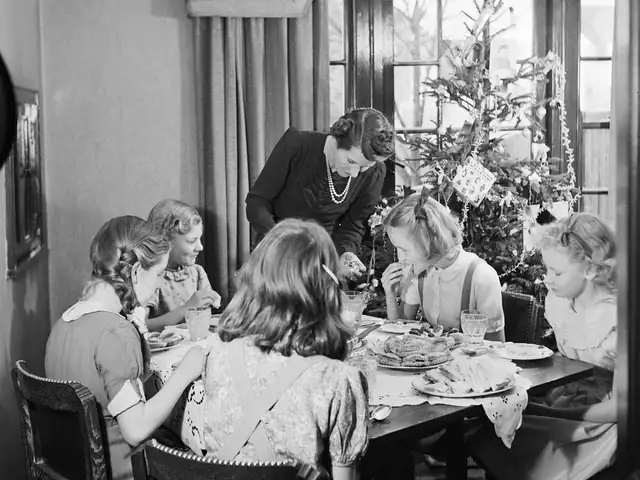
The photo above shows a children’s Christmas tea in Pinner, near London, in December 1944: five girls, a plate of sandwiches and a tree by the window. A family tradition is that kind of thing. The same small thing on the same day, year after year, until the children start it themselves.
Start one or two small traditions this year, such as a countdown paper chain, a wish list written together or reindeer food on Christmas Eve, and keep the ones the children ask for again. The fifteen below run in calendar order, from the wish list in November to the year card after Christmas, each with its 2026 date and what it needs. Eleven have a free printable that types your children’s names or photos onto the sheet; the other four need no printing at all.
Which Christmas traditions can you start this year?
| # | Tradition | When in 2026 | What it needs |
|---|---|---|---|
| 1 | Write the wish list together | the weekend after Thanksgiving, 28–29 November | a wish list sheet |
| 2 | A photo advent calendar of your year | ready by Monday 30 November | up to 24 photos, advent calendar maker |
| 3 | A countdown paper chain | first strip Tuesday 1 December | a paper chain, six sheets |
| 4 | St Nicholas shoes | evening of Saturday 5 December | clean shoes, clementines, nuts |
| 5 | A reverse advent box | 1 to 24 December | a cardboard box, one item a day |
| 6 | A lights walk | any dark evening | a thermos and warm coats |
| 7 | A gingerbread house contest | a December weekend | judging sheets and ballots |
| 8 | Carol singing with your own songbook | a December evening | a songbook |
| 9 | Wrapping paper with their names on it | the week before Christmas | name wrapping paper |
| 10 | A train story night with golden tickets | Christmas Eve or earlier | golden tickets |
| 11 | Reindeer food on the lawn | Christmas Eve, Thursday 24 December | oats, toppers |
| 12 | Following Santa on the tracker | Christmas Eve evening | a screen, noradsanta.org |
| 13 | A letter from Santa under the tree | Christmas morning, Friday 25 December | a letter from Santa |
| 14 | A party game after Christmas dinner | Christmas Day or Boxing Day | a pin the nose poster |
| 15 | The year on one card | between Christmas and New Year | one photo, a year card |
Which traditions start before December?
1. Write the wish list together
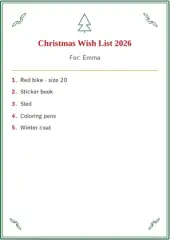
Sit down with the children the weekend after Thanksgiving (28 and 29 November 2026) and write the list properly: one wish per line, the size and the color next to the clothes, a tick in the priority box by the one that matters most. The Christmas wish list maker prints it finished, with the child’s name in the header and a column for where to buy each thing, or as a blank sheet for children who want to write it themselves. Grandparents who ask “what do they want” get a copy.
2. A photo advent calendar of your year
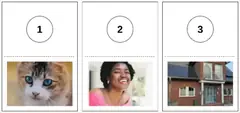
Instead of chocolate behind the doors, the year’s photos: the first day at school, the beach, the new baby cousin. The photo advent calendar maker turns up to 24 photos into numbered cards, either fold-door cards whose number lifts to show the photo or peg cards for a string across the wall. Assemble it by Monday 30 November, because the first door opens on Tuesday 1 December. The advent calendar guide has the cutting and hanging.
3. A countdown paper chain
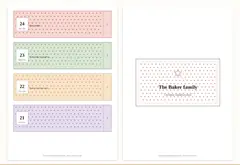
The oldest countdown there is: one loop of paper for every day, and each morning a child tears one off. A chain started on 1 December has 24 strips to Christmas Eve or 25 to Christmas Day, and the strips print four to a sheet, so six sheets of paper for the usual chain (read from the maker’s print layout, 28 October 2026). The paper chain maker numbers the strips from your own start date and prints one activity on each strip if you type them in: bake cookies, watch a Christmas film, phone grandma. Started late? Ten days print ten strips.
Which traditions fill the weeks of December?
4. St Nicholas shoes on 5 December
In much of Europe, children put their cleaned shoes outside the door on the evening of 5 December and find them filled on the morning of St Nicholas Day. In 2026 that is Saturday night into Sunday 6 December, so no school morning rush. Keep it small: a clementine, a handful of nuts, a chocolate coin. Nothing to print.
5. A reverse advent box
Every day from 1 to 24 December, the children put one thing into a box instead of taking one out: a tin of soup, a packet of pasta, a pair of gloves. On Christmas Eve or just before, the box goes to the local food bank together. Ask the food bank first what it needs most; some prefer tins and dry food only.
6. A lights walk
Pick a dark evening, fill a thermos with hot chocolate and walk the streets with the best-lit houses. Children who are old enough can keep a tally: most reindeer, best roof, the house with the inflatable snowman. It costs nothing and it works the same at five and at fifteen.
7. A gingerbread house contest with real judges
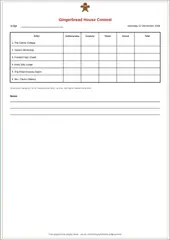
Building the houses is the fun part; judging them is what makes it a tradition. Name the categories (most candy, best roof, best tiny details), give every adult a scorecard and every guest a ballot, and announce the winner after dinner. The gingerbread judging sheet maker prints a scorecard per judge with a box for every entry, a page of eight cut-apart guest ballots, awards for first to third place and a certificate for every house, so nobody goes home empty-handed.
8. Carol singing with your own songbook
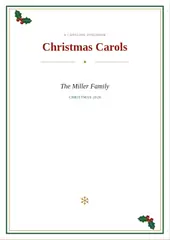
Choose the carols your family actually sings, in your order, with your family name on the cover, and sing them at the door of a neighbour, at a care home or around your own tree. The caroling songbook maker prints a folded, stapled booklet or big-print pages that grandparents can read without glasses; every carol comes from a public-domain source that is printed in the book.
9. Wrapping paper with their names on it
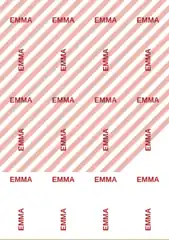
Every present for one child wrapped in paper that repeats that child’s name, so the sorting under the tree takes care of itself. The name wrapping paper maker prints 24 name cells to a sheet (read 2 October 2026); one A4 sheet wraps a book, two taped together take a shirt box. The wrapping paper guide has the measuring and the ink advice.
Which traditions belong to Christmas Eve?
10. A train story night with golden tickets
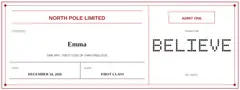
Read a train story by the tree in pajamas, with hot chocolate, and hand every child a golden ticket at the door. The Christmas train ticket maker prints a true 8 × 3 in ticket with each child’s name and the date, punched by the conductor, two tickets to a cutting sheet. It works on Christmas Eve or on any December night that needs a lift.
11. Reindeer food on the lawn
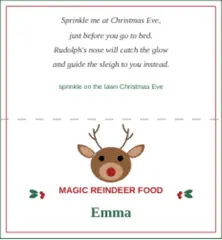
Before bed on Christmas Eve (Thursday 24 December 2026), the children sprinkle a handful of oats on the lawn or the doorstep so the reindeer find the house. Use plain oats and leave out glitter, which birds and wildlife eat. The reindeer food topper maker prints the poem topper with each child’s name for a small bag, six to a sheet at the craft-bag size (read 2 October 2026), and the reindeer food guide has the bird-safe recipe.
12. Following Santa on the tracker
On Christmas Eve, NORAD’s Santa tracker at noradsanta.org follows the sleigh around the world, country by country. Watching where Santa is “now” is the best argument for going to bed that any parent has. Nothing to print; keep the screen for this one thing.
Which traditions belong to Christmas Day and after?
13. A letter from Santa under the tree
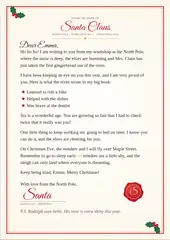
On Christmas morning, an envelope from the North Pole next to the presents, addressed to each child by name, saying three things Santa noticed this year. The letter from Santa maker writes it from the child’s name, age and the good things you type, in a warm, a short or a funny voice, signed and sealed, with a Nice List certificate beside it. What to say for each age is in what to write in a letter from Santa. Keep each year’s letter; read together, they become the child’s own story.
14. A party game after Christmas dinner
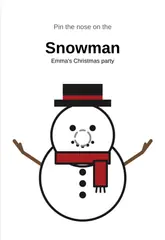
The hour between dinner and dessert is when cousins get restless. A blindfold game everybody from three to eighty can play fixes that. The pin the nose maker prints a snowman, Rudolph or Santa poster with the family’s name on it, a sheet of numbered noses and a blindfold band, on one page or as a tiled poster up to 20 × 30 in.
15. The year on one card
Between Christmas and New Year, sit down with one photo from the year and fill in the best moment, the funniest thing and one plan for next year. The year in review card prints the year large at the top and your photo in the middle, one page per child. Make a stack for New Year’s Eve, then put the cards away with the wish lists; in ten years they are the best thing in the box.

How many traditions should a family start at once?
One or two. A tradition is something you repeat, and a December with fifteen new rules is a project. Pick the ones that suit your children’s ages and your evenings: the paper chain and reindeer food work from age three, the gingerbread contest and the carols from about six, the year card at any age that can hold a pen. Next December, ask the children which ones they want again. Keep those and drop the rest without guilt.
How do you make a tradition stick?
Same day, same order, every year. The paper chain goes up on 1 December, not “sometime early in December”. The reindeer food comes after the bath and before the story. Children hold on to the order more than to the thing itself.
Keep what you made. One large envelope a year with the year written on the front: the wish list, the Santa letter, the golden ticket, the year card. The envelopes are what the children will ask for when they are grown up.
What do these traditions cost?
Mostly paper and ink. Every printable on this page is free, without an account, and runs in your browser. The four traditions without a printable cost nothing or close to it: oats for the reindeer, clementines for the shoes, a few tins for the food bank box. If your printer is short on ink, the letter from Santa has an ink-saving paper style, and the paper chain and wish list print well in black and white.
Questions
What are good Christmas traditions to start with kids?
Small ones you can repeat every year without effort: a countdown paper chain, writing the wish list together, reindeer food on Christmas Eve and a letter from Santa on Christmas morning. Pick one or two and keep the ones the children remember.
What is a good Christmas Eve tradition for kids?
Sprinkle reindeer food on the lawn before bed, follow Santa on the NORAD tracker, or hand out golden tickets for a train story night. All three fit into the hour before bedtime.
When should we start our Christmas traditions?
The wish list and the advent calendar want to be ready by the end of November, because the calendar starts on Tuesday 1 December 2026. Everything else can start on its own day in December.
What Christmas traditions are free?
A lights walk, the St Nicholas shoes, tracking Santa, a reverse advent box for the food bank and every printable on this page cost nothing but paper and ink. Reindeer food needs a cup of oats.
How many traditions should a family start?
One or two a year. A tradition is something you repeat, and a December with fifteen new rules is a project, not a tradition.
What do you put in the shoes on St Nicholas Day?
Small things: a clementine, nuts, a chocolate coin or a little note. Children put their cleaned shoes outside the door on the evening of 5 December and find them filled in the morning.