On this page
- What is papel picado?
- How do you make papel picado at home?
- How do you print the banner from your phone?
- What exactly prints on each sheet?
- How many panels and sheets will your word need?
- Which colours and pattern panels should you pick?
- How do you hang the banner?
- When do you make it — and what else prints for the same window?
- Questions
Papel picado asks two things of you: pick the words, and do the stringing. The drawing — the part that stops most people — is what the free papel picado banner generator on this site does. What is left is arithmetic and craft, and the arithmetic is knowable before you print a single sheet. Every number in this guide comes from that generator’s own geometry, read from its code and read back from the running tool on 23 September 2026 — computed, not estimated.
What is papel picado?
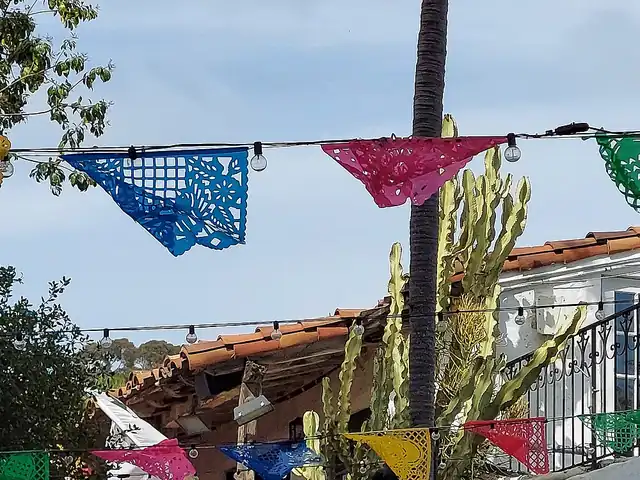
A banner of coloured panels with shapes cut or punched out of them, hung on one long string. In Mexico it hangs across streets and doorways for fiestas, birthdays and weddings, on classroom walls during Hispanic Heritage Month (15 September to 15 October), and on ofrendas for Día de los Muertos on 1 and 2 November — markets sell it ready-strung for weeks before the date. Traditional panels are cut by hand from tissue paper, dozens to a sheet, by artisans whose work lasts for years; the fragile paper read against the festival is part of what the decoration means.
The loudest want-voice in the current chatter is personalization: people want their own word or name on the banner, and the answer they keep finding is an account-walled template builder (a 20 September 2026 TikTok offering “papel picado personalizado” as Canva templates drew 367,533 views in days). That is the gap this guide fills: a banner with your word on it, made this afternoon, for the price of paper.
One honest limit first: a printed banner is a stand-in for cut tissue paper, not the craft itself. The cutting and stringing by hand is the tradition; the print is what you do when you need the look at home today.
How do you make papel picado at home?
Five steps, and the PDF’s stats line does the counting before you commit paper:
- Type the word. Up to 18 characters — a name, “FIESTA”, “DÍA DE MUERTOS”. Accented letters such as Á, É, Í and Ñ print as typed; emoji and other characters the PDF cannot carry are dropped, and the tool says how many went.
- Pick colours, pattern and paper. Four palettes, four pattern motifs (flowers, stars, diamonds, hearts), A4 or Letter.
- Print at 100 per cent. “Actual size”, not “fit to page” — at any other setting every panel shrinks and the two-per-sheet layout quietly stops matching the fold you are about to make.
- Cut the dashed rectangles. Scissors are enough; the dashed line runs around each piece. Solid line means fold, never cut.
- Fold and string. Lay string along the top of each panel, fold the 14 mm tab over it, tape the fold at the back. Leave about 15 mm of string between panels.
That is the whole job. A six-letter word is under half an hour including printing.
How do you print the banner from your phone?
The PDF is a normal file, so the phone that downloaded it can print it. Open the download in your phone’s files app and look for the print option — the phone then looks for a nearby printer: AirPrint on an iPhone, the print service on Android, or the printer maker’s own app. In the print options, look for “Actual size” or scale 100 per cent, never “fit to page”. That is the same rule as step 3, for the same reason: a shrunken print breaks the two-per-sheet layout and the fold — and the PDF’s own sheet footer repeats it, “print at 100 % (full size)”. No printer at home? Print shops, libraries and office service counters print PDFs from email or a USB stick — ask at the counter.
What exactly prints on each sheet?
Two pieces per sheet, on A4 and on Letter alike, centred with a 10 mm gap between them. Each piece is 130 mm wide and 109 mm tall: a 95 mm panel plus the 14 mm fold-over tab at the top. On A4 (210 × 297 mm) that leaves about 40 mm free at each side and 34 mm above and below the pair; Letter (215.9 × 279.4) is a few millimetres tighter top and bottom but the pieces are identical.
Inside each panel, the decoration is drawn at exact scale:
| Element | Size on paper |
|---|---|
| Pattern motif (flowers, stars, diamonds, hearts) | about 59 × 59 mm box, panel centre |
| Scalloped bottom edge | 13 half-circles, 10 mm across each |
| Hanging holes row | three 5 mm circles under the fold line |
| Letters | about 59 mm type size, centred |
The letters and motifs print as white shapes on the coloured panel — unprinted paper showing through, exactly where a hole would be. That is the honest shortcut of the printed version: nothing is punched, and no craft knife is needed. You cut one rectangle per panel and the banner reads as cut paper from two steps away.
How many panels and sheets will your word need?
The composition is fixed: one panel per letter, one pattern panel between each pair of words, one at each end. So the count is letters + words + 1 — and sheet counts follow, two panels to a sheet. These are the generator’s real numbers, read from the running tool on 23 September 2026:
| Word | Panels | Sheets (A4 or Letter) | Strung length |
|---|---|---|---|
| MARIA (5 letters) | 7 | 4 | about 1.0 m |
| DIA DE MUERTOS (12 letters, 3 words) | 16 | 8 | about 2.3 m |
| DIA DE LOS MUERTOS (15 letters, 4 words) | 20 | 10 | about 2.9 m |
| 18-letter word (the maximum) | 20 | 10 | about 2.9 m |
The strung length allows 145 mm per panel — 130 mm of panel plus 15 mm of spacing — so the banner is as long as the table says before you add string for tying. Two patterns hide in the numbers. Spaces cost panels, not letters: each space adds a decorated pattern panel — “DIA DE MUERTOS” is 16 panels where its 12 letters as one word would need 14, and the spaced banner is usually the nicer one. And the maximum is 20 panels whatever you type, because the input stops at 18 characters: two end panels plus 18 letters.
For doorway scale, MARIA at a metre fits a door; FIESTA at 1.2 m takes a wide doorway or a garage; the two-metre-plus banners are patio and party-table strings.
Which colours and pattern panels should you pick?
The four palettes each answer a use:
| Palette | Look | Made for |
|---|---|---|
| Fiesta | six bright mixed colours | birthdays, fiestas, the classic street look |
| Día de Muertos | marigold orange, magenta, purple, teal, pink | ofrendas and 1–2 November |
| Pastel | five soft shades | baby showers, young children’s parties |
| Ink saver | black outlines on white | classrooms, cheap printing, colouring in |
Ink saver is the one worth explaining. A full-colour banner across eight or ten sheets is a lot of ink; ink saver prints the same panels as outlines only, so a packet of felt-tip pens turns the PDF into the colouring step before the cutting — the classroom sequence for Hispanic Heritage Month, done by one printout. For a photo-based activity instead of patterns, the photo to coloring page tool makes colouring sheets from your own pictures in the same browser, nothing uploaded.
Pattern panels — flowers, stars, diamonds or hearts — are pure choice: they carry no lettering, so they set the mood between the words and at the two ends. Flowers and hearts read softest for memorials and family words; stars and diamonds read most like a street fiesta.
How do you hang the banner?
Fold, string, tape:
- Cut a length of string a hand-width longer than the banner, plus whatever you need for tying.
- Lay the string along the top of the first panel, on the fold line.
- Fold the 14 mm tab over the string and fix it with a small piece of tape on the back — the tape never shows from the front.
- Slide the next panel along the string to about 15 mm away and repeat to the end of the word.
- Hang with a slight sag, tying the ends to nails, hooks or the backs of door frames.
Plain printer paper panels survive a dry evening under cover; for wind and weather, heavier paper lasts longer but folds worse — score the fold line with the back of the knife (never the blade) before folding. When one panel tears or fades, reprint just its sheet: the word’s panel order is left to right, so “sheet 5 of 8” is the fifth and sixth panels from the left.
When do you make it — and what else prints for the same window?
Hispanic Heritage Month runs 15 September to 15 October, and a classroom banner is an afternoon in that window. For Día de los Muertos, hang the banner as the ofrenda goes up in the days before 1 November — a printed banner takes minutes, so make it when you build, not weeks ahead. The full bundle of printable Day of the Dead projects, banner included, is on the Día de los Muertos hub, whose classroom section lays out the ink-saver sequence for a class.
The same site carries the season’s other windows: a pumpkin carving stencil from a photo for Halloween on 31 October, and a rangoli stencil generator for Diwali on 8 November — a printed rangoli guide with its own computed sheet counts covers that one.
Every panel size, sheet count, strung length and character limit above is computed from the papel picado banner generator’s own geometry — read from its code and read back from the running tool’s stats line on 23 September 2026. The TikTok demand observation is dated 20 September 2026 from the research scan behind the tool.
Questions
How do you make papel picado at home without a Cricut or Canva?
Print it — type your word into the free banner generator, print the PDF at 100 per cent, cut along the dashed rectangles, then fold each panel's top edge over string and tape it at the back. No cutting machine, no account, nothing uploaded.
How many sheets of paper do I need for one word?
Two panels fit on one sheet of A4 or Letter, and a word needs one panel per letter, one pattern panel between each pair of words, and one at each end. FIESTA is 8 panels on 4 sheets; an 18-letter word is the maximum at 20 panels on 10 sheets.
Do I have to cut the letters out with a craft knife?
No — that is the honest shortcut of the printed version. The letters and patterns print as white shapes on coloured panels, so they read as punched paper and your only cutting is the dashed rectangle around each panel.
What paper should I print papel picado on?
Plain printer paper — it feeds reliably and holds a crease. Heavier paper survives outdoors longer but is harder to fold over the string; tissue paper, the traditional material, is too flimsy for most home printers.
How do you hang a papel picado banner?
Lay a piece of string or twine along the top of each panel, fold the top edge over it, and fix the fold with a small piece of tape on the back. Hang the string with a slight sag, the way street banners hang.
Can I put a name or any word on it?
Yes — up to 18 characters, letters, numbers and basic punctuation. Accented letters such as Á, É, Í and Ñ print as typed (DÍA and QUINCEAÑERA work); anything the PDF cannot carry, such as emoji, is removed and the tool tells you how many characters that was.
Is a printed banner okay for Día de los Muertos?
Papel picado is a folk decoration for celebrations in Mexico, not a symbol with rules, and printed banners are a common classroom and party craft. Artisans still cut tissue panels by hand and that work lasts for years; the printed version is the stand-in for the day you need a banner this afternoon.