A chain of clues that ends at the present
A scavenger hunt at home is a chain. Each card is hidden at the answer of the card before it, so the children run from place to place and the last clue leads to the present. Ready-made clue sheets come in a fixed order, which means hiding things wherever the sheet says. Here you tap your own places in your own order, and every card is written for the place it points to.
This is the sample route on Christmas morning, with six places:
| Card | Where it hides | Its clue leads to |
|---|---|---|
| Clue 1 | handed over to start | under the pillow |
| Clue 2 | under the pillow | a shoe |
| Clue 3 | inside a shoe | the fridge |
| Clue 4 | in the fridge | the washing machine |
| Clue 5 | in the washing machine | the sofa cushions |
| Clue 6 | under a sofa cushion | the Christmas tree, with the present |
Pictures, rhymes or riddles
| Clues | For | On the card |
|---|---|---|
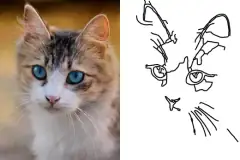
| Pictures | children who can’t read yet | a large drawing of the place and one line to read out: “Where do we keep the milk cold?” |
| Rhymes | children who read | four short rhyming lines about the place |
| Riddles | teens and adults | one sentence that takes a moment: “A light comes on inside me only when you look, and I stay cold in every season.” |
There are 28 places to choose from, from the fridge and the cookie jar to the mailbox, the car and a coat pocket, each with all three kinds of clue. Nothing on the list is hot: a hunt never sends anyone to the oven or the toaster.
Printing and hiding
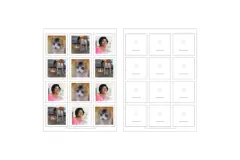
- Print at actual size on plain paper and cut along the dashed lines. Four cards fit on a sheet; the hiding plan is the last page.
- Put the present in the last place, with the “You found it!” card.
- Walk the route backwards with the plan in hand and hide each card where it says, ticking it off.
- Hand over card 1, and stay close for the first two: once the children get the idea, the rest goes by itself.
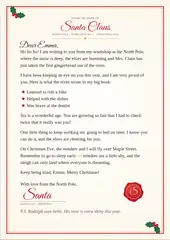
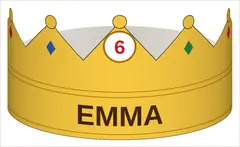
For Christmas morning, the letter from Santa can be the first thing they open and the hunt the second. A paper crown with their name makes the birthday version complete. More for the season is on the Christmas page, and more for the family on the Family page.
Questions
How does a scavenger hunt with clue cards work?
The first card is handed over and its clue points to a place, say the fridge. In the fridge waits the second card, whose clue points to the next place, and so on. The clue on the last card points to the place where the present is. This maker prints the cards in that order and a hiding plan that says which card goes where.
How do I hide the clues?
Start at the end. Put the present and the 'You found it!' card in the last place, then hide the cards in reverse order, following the hiding plan, so nobody stumbles on one early. Keep card 1 to hand over. Each card also says on its foot where it belongs, in small grey letters.
How many places can a hunt have?
From 2 to 12, plus your own. Every place is one card, and the 'You found it!' card makes one more, four cards to a sheet: the six places of the sample print seven cards on two sheets, followed by the hiding plan on its own page.
Can a child who can't read yet play?
Yes. Choose picture clues: every card shows a large drawing of the next place (the fridge, the bathtub, a shoe) with one short line a grown-up can read out. Rhymes suit children who read, and the riddles are written for teens and adults.
Can I write my own clue?
Yes. Type a place that isn't in the list, like Grandma's chair or the garden shed, and the clue in your own words, and add it. It joins the route at the end, and you can tap it off and on like the others.
Is anything uploaded from this page?
No. The cards and the plan are drawn and turned into a PDF inside your browser; the name and your own clues never leave your device, and there is no account. Your route is remembered in this browser for next time; clearing your browser data removes it.